1. Mapping Environmental Justice Just a Few Clicks Away

Dave Harp
Published: April 14, 2021
In the neighborhood straddling MD Route 26 in West Baltimore, just north of the Mondawmin Mall, residents grapple daily with dirty air, vehicle-choked roads, potentially hazardous industrial plants and a scourge of lead-tainted homes.
Consider, too, the residents themselves. The typical family earns among the lowest yearly incomes in the state, babies are much more likely to be born with low birthweights and the inhabitants are almost exclusively Black.
Nearly every statistic suggests that the beleaguered area — Baltimore city census tract 1505 — fits most experts’ definition of an environmental justice community: a place where a vulnerable population faces greater-than-normal pollution risks. But does it?
1. Pacific Northwest Maps Reveal Climate Inequities
Published: Friday, February 26, 2021
Residents of 152 cities and towns in the Pacific Northwest are particularly vulnerable to climate-fueled wildfires. Residents of 60 other communities are most susceptible to floods. And people living in 75 towns are most liable to suffer — maybe even die — because of heat waves.
That’s according to an analysis released Wednesday by news agency InvestigateWest and planning firm Headwaters Economics. It drills down to towns where, for example, sparse tree canopies and older residents make communities more susceptible to heat waves than younger populations in leafier places.
The analysis looks at likely climate disasters and examines factors such as the number of people with disabilities, how many live in poverty, the proportion that rents their home and how many of the vulnerable are people of color.
2. Historic Redlining and Climate Vulnerability
Updated March 06, 2021 by Barbara Moran
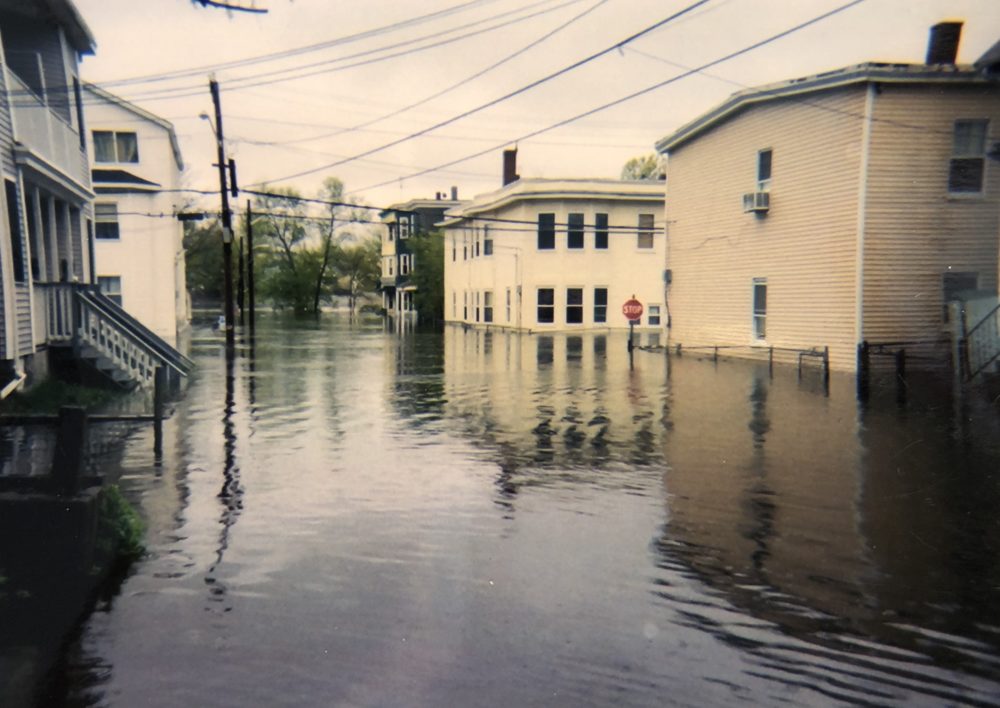
The rain started just before Mother’s Day, in 2006. It fell for days over the Merrimack Valley, causing the worst flooding in decades.
Water reached to rooftops. Pipes burst in Haverhill, pouring millions of gallons of sewage into the rising Merrimack River. Streets flooded, highways closed, thousands of people evacuated their homes.
Andy Vargas was a teenager at the time, living with his parents in Haverhill. He remembers his dad buying three separate pumps to empty the flooded basement. His grandmother’s house, a few blocks away, was also flooded, with water reaching “almost halfway to the roof,” Vargas recalls. “And you know, buying a $100 pump for families in those neighborhoods like mine can really hurt your monthly income.”
 Barnard College/Environmental Department-Sabin Center Project on Environmental Justice